Choosing a dog collar is not just a matter of aesthetics. It's essential to consider several criteria to ensure your dog's comfort and safety.
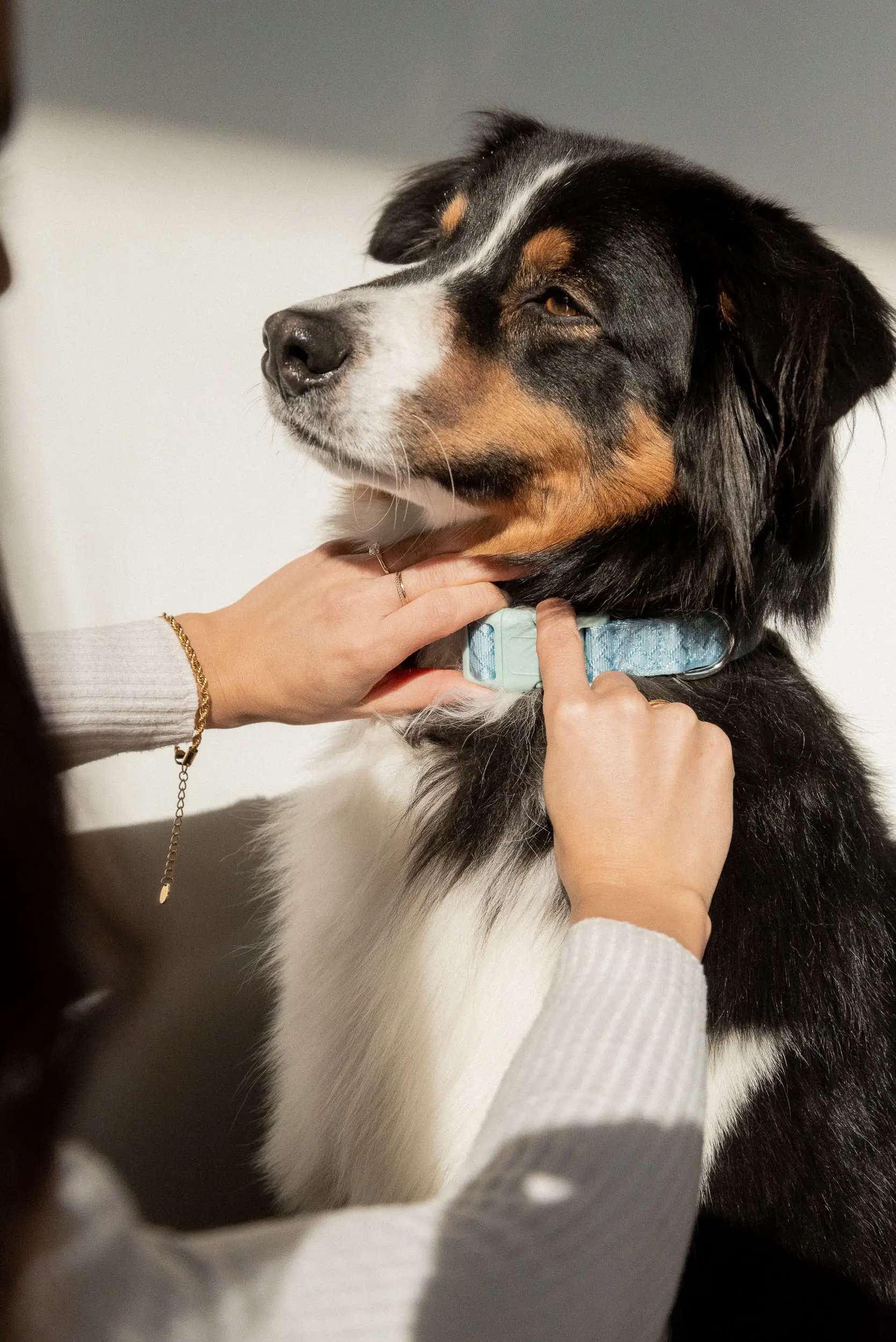
Size is a crucial factor: a collar that's too tight risks being uncomfortable, while one that's too loose could come off too easily. It's recommended to be able to slip one or two fingers between the collar and the dog's neck for an optimal fit.
Finally, always remember to check the strength of the buckle and the attachment ring. A good dog collar must withstand pulling, especially if your dog tends to pull during walks. In this case, we recommend buckle-fastening collars for added security, or switching to a harness for more comfort.
What material should you choose for your dog's collar?
The material choice for a dog collar impacts its comfort, durability, and maintenance. Here are the different materials you can find at Muzon:
- Collars made from recycled polyester: Eco-friendly and tough, they combine lightness and strength. Their soft texture is comfortable for everyday wear.
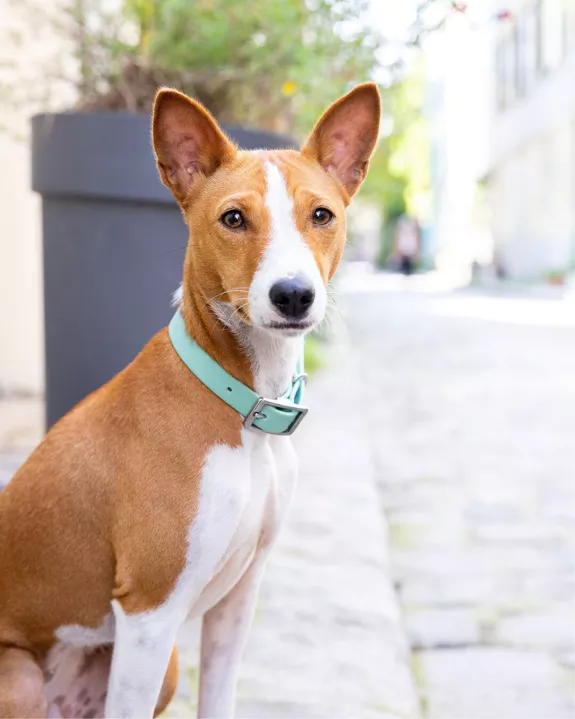
- Collars made from PVC: Waterproof, easy to clean, and antibacterial, they are ideal for active dogs who love to get dirty.
- Collars made from cotton: Natural and breathable, they are gentle on the skin and very suitable for sensitive dogs or those with short hair, prone to irritation.
- Collars made from nylon: Recommended for large dogs or those who pull a bit on the leash, they resist wear and tear and pulling, without sacrificing comfort.
Questions fréquentes
Mesure le tour de cou de ton chien et ajoute environ 2 cm de marge. Un collier bien ajusté laisse passer deux doigts à plat entre le collier et le cou.
Un harnais est préférable pour un chien qui tire, car il répartit la pression sur le corps. Un collier suffit pour un chien calme et bien éduqué, et reste nécessaire pour porter sa médaille d'identification.
C'est un collier qui se resserre légèrement lors d'une traction, sans étrangler le chien. Il est surtout utilisé pour les chiens au cou fin ou qui ont tendance à reculer pour se dégager.
Utilise l'anneau en D prévu sur le collier, ou un porte-médaille silencieux qui évite le bruit de la médaille contre la boucle.
Le cuir est résistant et vieillit bien, mais demande un peu d'entretien. Le nylon est léger, imperméable et facile à nettoyer.
Vérifie régulièrement l'état de la boucle et des coutures, et remplace-le dès qu'un signe de fragilité apparaît. Pour un chiot, adapte aussi la taille au fil de sa croissance.