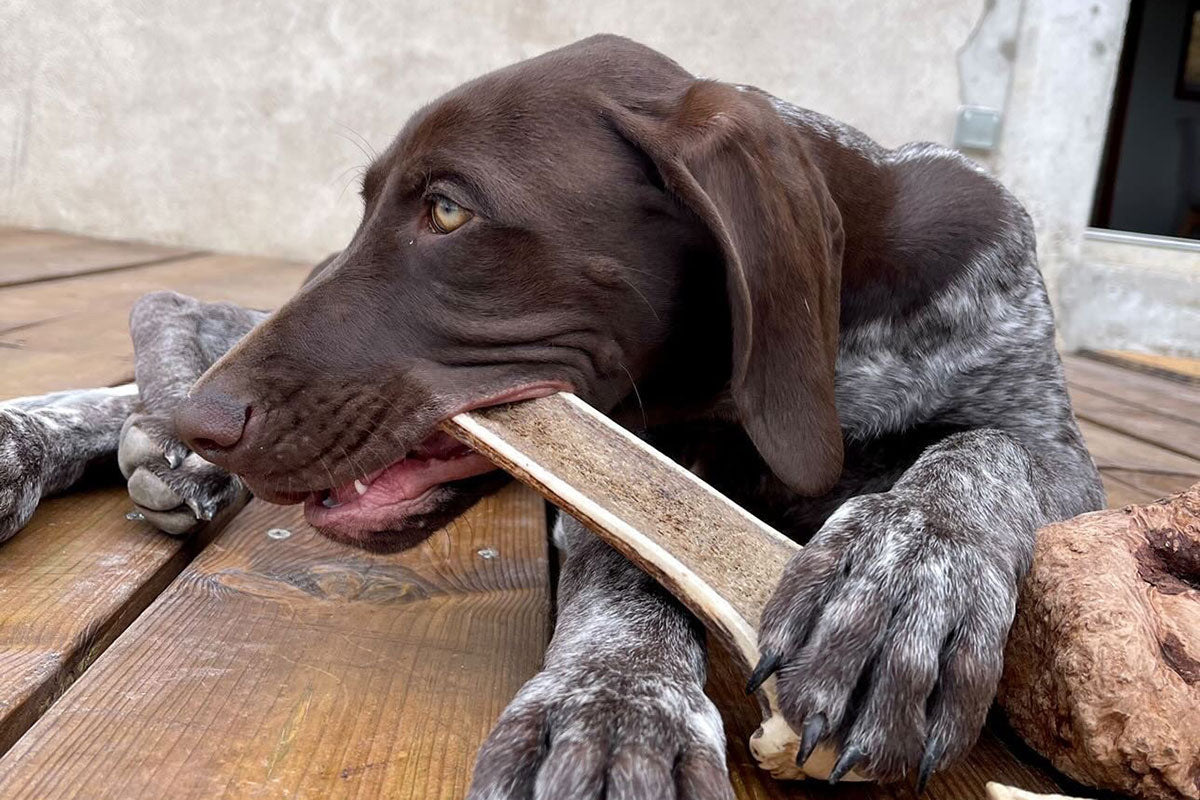
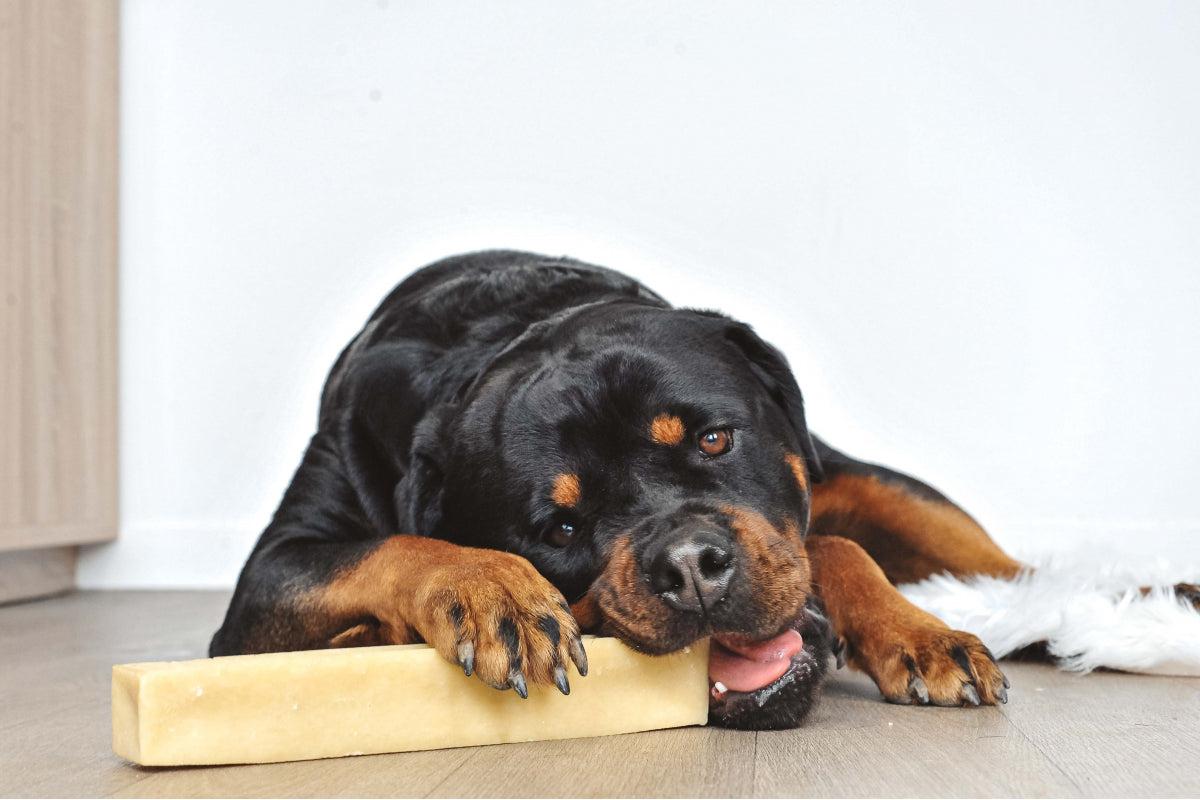
Natural chewing is a natural and fundamental need for dogs. It contributes not only to their mental well-being but also to their physical health.
By chewing regularly, your dog takes care of their oral hygiene by limiting plaque and tartar buildup, thus reducing the risk of gingivitis. Furthermore, chewing helps strengthen jaws and promotes better digestion.
It also plays a soothing role, helping to reduce stress and anxiety, especially during new or stressful situations.
To meet this need, it is recommended to offer natural chewing solutions adapted to your dog's size, age, and preferences.
What chew should you give your dog?
There is a variety of natural chews to meet the specific needs of each dog.
Antlers are particularly popular for their durability and richness in essential minerals like calcium and phosphorus. They are an ideal option for vigorous chewers from 6 months of age.
Plant-based chews like olive wood or heather roots, are alternatives to animal chews, robust and naturally infused with olive oil, offering a healthy and pleasant chewing experience that doesn't splinter, respecting gums, from 4 months of age.
As another option, cheese sticks are natural chews, rich in protein and low in fat, that delight your dog's taste buds while caring for their health, from 4 months of age.
For puppies or senior dogs, opt for softer textures, such as meat-based natural chews. These options allow them to satisfy their chewing instinct without straining their more fragile teeth.
Questions fréquentes
C'est un besoin naturel et instinctif chez le chien. Il s'agit aussi d'une vraie dépense d'énergie : environ 30 minutes de mastication équivaudraient à 1h30 de balade, ce qui aide aussi à réduire le stress.
Oui : le frottement mécanique aide à ralentir la formation du tartre et à renforcer les muscles de la mâchoire.
Le plus souvent, 2 à 3 fois par semaine suffisent pour profiter des bienfaits sans excès.
Oui : retire-la dès que des morceaux commencent à se détacher, pour éviter tout risque d'ingestion ou d'étouffement.
Adapte la dureté et la taille à son gabarit et à la puissance de sa mâchoire : un petit chien n'a pas besoin d'une mastication pensée pour un grand chien, et inversement.
Vérifie l'âge minimum indiqué sur la fiche, et privilégie des matières plus tendres, adaptées à ses dents de lait.